
Overview
Marine rigging solutions require wire rope selected according to the operating load, corrosion exposure, bending conditions, rotation requirements, equipment type and end termination. Guangtong Metal supplies stainless steel wire rope and galvanized steel wire rope for yacht rigging, marine lifelines, winches, deck machinery, lifting equipment, towing systems and offshore applications.
Available constructions include 1×19, 7×7, 7×19, 6×19, 6×36, 19×7 and other configurations according to project requirements. Material, core type, diameter, tensile grade, lay direction, lubrication, length and end terminations can be supplied according to confirmed specifications.
If your specification is not yet complete, send us the application, equipment information, required load, drawings, existing rope markings or sample photos. Our team will review the available information, clarify the remaining requirements and help you identify suitable marine wire rope options.
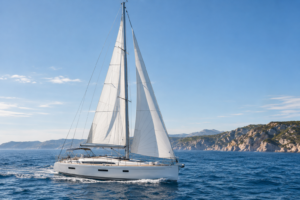
Marine Wire Rope Applications
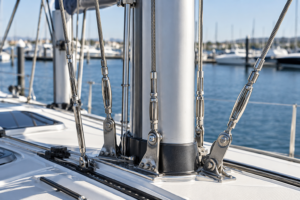
Sailboat and Yacht Standing Rigging
Standing rigging supports the mast and normally remains in a fixed, tensioned position. A relatively rigid, low-stretch construction such as 1×19 stainless steel strand is commonly considered for stays, shrouds and straight tensioned assemblies.
The wire rope diameter, minimum breaking load, terminal type, material grade and finished length must be confirmed according to the vessel design and applicable marine requirements.
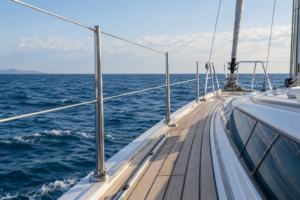
Marine Lifelines and Guard Cables
Stainless steel wire rope can be used for marine lifelines, deck guard cables and perimeter protection assemblies.
Cable diameter, spacing, tension, terminal fittings and attachment points should be selected according to the vessel design and applicable safety requirements. Terminations must remain secure while allowing inspection and tension adjustment where required.
Flexible Marine Cable Assemblies
Flexible wire rope constructions can be used for applications involving movement, routing or bending. These may include marine control cables, equipment connections and customized cable assemblies.
A 7×7 construction provides moderate flexibility, while 7×19 is generally more flexible and better suited to applications involving repeated bending. Bend radius, sheave diameter, operating load and cycle frequency must be considered during selection.
Marine Winches and Deck Machinery
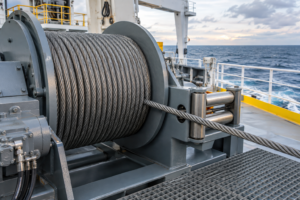
Wire ropes used on marine winches and deck machinery must withstand loading, bending over drums or sheaves, surface wear and environmental exposure.
Depending on the equipment and operating conditions, 6×19 or 6×36 wire rope with a fiber core or independent wire rope core may be considered. The drum diameter, sheave diameter, working load, rope speed, operating frequency and required minimum breaking load should be confirmed before selection.
Marine Cranes and Lifting Equipment
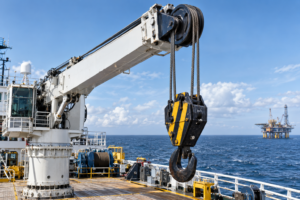
Marine cranes and lifting equipment may require wire rope with high strength, fatigue resistance, resistance to crushing and controlled rotational characteristics.
A 6×36 construction with an independent wire rope core provides flexibility and structural support for many demanding applications. A 19×7 rotation-resistant construction may be selected where load rotation must be reduced.
Wire rope used for lifting must comply with the specified standard, equipment requirements, safety factor, inspection criteria and certification requirements.
Towing and Mooring Applications
Galvanized or other specified wire ropes may be supplied for towing, mooring and marine positioning applications according to confirmed project requirements.
These applications may involve dynamic loading, abrasion, bending, shock loads and severe corrosion exposure. Rope construction, core type, diameter, tensile grade, lubrication, termination and certification must be confirmed according to the vessel or operating specification.
Marina and Coastal Structures
Stainless steel wire rope can also be used for marina railings, dock-side barriers, coastal architectural structures and outdoor cable assemblies exposed to humid or salt-laden environments.
AISI 316 stainless steel is generally preferred for more demanding coastal exposure. However, regular cleaning and inspection are still necessary because salt deposits, surface contamination and crevice conditions can affect stainless steel and its fittings over time.
[IMAGE 4: Stainless steel lifeline cables installed around a yacht deck]
Where Marine Wire Rope Is Used
Typical marine, shipboard and offshore applications include:
- Sailboat stays and shrouds
- Yacht standing rigging
- Marine lifelines and deck guard cables
- Flexible control cable assemblies
- Marine winches
- Deck machinery
- Shipboard cranes
- Hoisting equipment
- Towing systems
- Mooring and positioning systems
- Marina railing systems
- Coastal structural cables
- Offshore equipment
- Customized marine cable assemblies
Not every construction is suitable for every marine application. Fixed support, repeated bending, working load, shock load, abrasion, rotation, corrosion exposure and fitting compatibility must be evaluated separately.
Recommended Marine Wire Rope Constructions
1×19 Stainless Steel Strand
A 1×19 construction is relatively rigid and has lower stretch than more flexible wire rope constructions. It is commonly used for yacht standing rigging and straight tensioned cable assemblies.
Typical applications include:
- Sailboat stays
- Yacht shrouds
- Fixed mast support
- Straight tensioned assemblies
- Marine structural cables
Because 1×19 strand has limited flexibility, it is not intended for repeated bending over small drums or sheaves. End terminals must be compatible with the strand construction and diameter.
7×7 Stainless Steel Wire Rope
7×7 stainless steel wire rope provides a practical balance between strength and flexibility.
Typical applications include:
- Marine lifelines
- Deck guard cables
- General marine cable assemblies
- Moderately flexible connections
- Coastal support cables
- Customized marine hardware assemblies
7×19 Stainless Steel Wire Rope
A 7×19 construction provides greater flexibility and is suitable for applications involving routing, movement or repeated bending.
Typical applications include:
- Flexible marine control cables
- Cable assemblies involving pulleys or sheaves
- Equipment connections
- Moving cable assemblies
- Applications requiring easier routing
Minimum bend radius, sheave diameter, operating load and cycle frequency should be confirmed before production.
6×19 Wire Rope
A 6×19-class wire rope provides relatively good resistance to abrasion and is widely considered for marine winches, hoisting, towing and general deck machinery.
It can be supplied with a fiber core or independent wire rope core according to the required strength, flexibility, resistance to crushing and operating conditions.
Typical applications include:
- Marine winches
- Deck machinery
- Towing systems
- General-purpose hoisting
- Applications involving surface wear
6×36 Wire Rope
A 6×36-class wire rope contains more individual wires and provides greater flexibility than a typical 6×19-class rope. It is suitable for applications involving repeated bending over drums or sheaves.
An independent wire rope core can provide additional strength, dimensional stability and resistance to crushing under demanding loads.
Typical applications include:
- Shipboard cranes
- Marine winches
- Lifting equipment
- Deck machinery
- Repeated bending over drums and sheaves
- Offshore equipment
19×7 Rotation-Resistant Wire Rope
A 19×7 construction is designed to reduce rope rotation under load. It may be used for marine cranes, hoisting equipment and lifting applications where load rotation must be controlled.
Typical applications include:
- Marine crane hoist ropes
- Single-part lifting lines
- Offshore lifting equipment
- Applications requiring reduced rope rotation
A 19×7 rope should be described as rotation-resistant rather than completely non-rotating. Correct installation, reeving, end termination, operating conditions and inspection are essential.
Material and Surface Options
AISI 304 Stainless Steel
AISI 304 stainless steel provides good general corrosion resistance and may be suitable for freshwater, indoor marine equipment and relatively mild coastal environments.
AISI 316 Stainless Steel
AISI 316 stainless steel provides improved resistance to chloride-related corrosion and is generally preferred for saltwater, coastal, high-humidity and other demanding marine environments.
AISI 316 should not be considered completely corrosion-proof or maintenance-free. Salt deposits, contamination and crevice conditions can still lead to corrosion.
Galvanized Carbon Steel
Galvanized steel wire rope provides an economical combination of strength and corrosion protection for marine winches, towing, mooring, deck machinery and other specified applications.
The zinc coating type, rope lubrication and maintenance requirements should be confirmed according to the operating environment.
Bright Steel Wire Rope
Bright steel wire rope may be supplied for applications where the rope is adequately lubricated and protected according to the equipment specification.
Material and surface selection should be based on corrosion exposure, operating conditions, required service life, maintenance schedule and project budget.
Available Specifications
Marine wire rope can be supplied according to confirmed vessel, equipment and project requirements.
- Material: AISI 304 stainless steel, AISI 316 stainless steel, galvanized carbon steel or bright carbon steel
- Construction: 1×19, 7×7, 7×19, 6×19, 6×36, 19×7 and other available constructions
- Core: Fiber core, wire strand core or independent wire rope core
- Diameter: According to equipment and load requirements
- Tensile grade: According to the specified standard and minimum breaking load
- Lay: Regular lay or lang lay; right-hand or left-hand direction
- Surface: Stainless steel, galvanized, bright or lubricated as specified
- Supply form: Reels, drums, coils or customized cut lengths
- End terminations: Thimbles, sleeves, sockets, eye terminals and other compatible fittings
- Testing: Diameter, construction, minimum breaking load and other agreed inspection items
- Documentation: Inspection records, test certificates and shipping documents according to confirmed requirements
- Packaging: Moisture-resistant, seaworthy and export-ready packaging options
- Identification: Product labels and customized packaging marks are available
Final specifications must be confirmed according to the working load, minimum breaking load, bending conditions, drum and sheave dimensions, rotation requirements, corrosion exposure, operating frequency and applicable standards.
Marine Wire Rope Fittings and Terminations
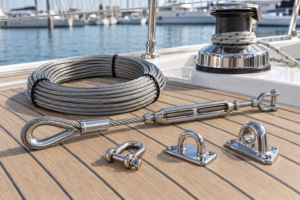
Correctly selected terminations are essential to the performance of a marine wire rope assembly. Guangtong Metal supplies wire rope accessories and can review fitting compatibility according to the rope diameter and construction.
Available options may include:
- Swage terminals
- Threaded terminals
- Eye terminals
- Thimbles
- Sleeves and ferrules
- Turnbuckles and tensioners
- Wire rope clips
- Sockets
- Shackles
- Customized end fittings
Please provide a technical drawing, sample photo or fitting dimensions when requesting a completed cable assembly. The terminal material, dimensions, rated capacity and attachment method must be compatible with the wire rope and operating environment.
Important Selection Considerations
Fixed or Flexible Application
Fixed standing rigging generally requires a relatively rigid, low-stretch construction. Applications involving movement or repeated bending require a more flexible wire rope.
Working Load and Minimum Breaking Load
Working load, minimum breaking load, dynamic load, shock load and applicable safety requirements should be confirmed before selecting the rope diameter, construction and tensile grade.
Drum, Sheave and Bend Conditions
The drum diameter, sheave diameter, groove profile and bending frequency affect wire rope performance. A flexible construction is generally required for repeated bending applications.
Rotation Requirements
Rotation-resistant constructions may be required when load rotation must be reduced. The selected rope must match the reeving system and equipment requirements.
Core Selection
A fiber core can provide flexibility and lubricant storage. An independent wire rope core generally provides greater strength, resistance to crushing and performance at elevated temperatures.
Saltwater and Coastal Exposure
Saltwater and chloride deposits increase corrosion risk. Material grade, surface protection, rope lubrication, fitting compatibility, cleaning and inspection frequency should be considered.
Inspection and Maintenance
Marine wire rope and fittings should be inspected for:
- Broken wires
- Corrosion and pitting
- Diameter reduction
- Abrasion and wear
- Crushing and deformation
- Kinks and birdcaging
- Damaged or loose terminations
- Loss of lubrication
- Uneven or reduced tension
Inspection and replacement intervals should follow the vessel, equipment, classification and project requirements.
Manufacturing and Supply Capabilities
Multiple Wire Rope Constructions
We can supply small-diameter yacht rigging cable as well as larger 6-strand and rotation-resistant wire ropes for marine equipment applications.
Customized Production
Material, construction, core, diameter, tensile grade, lay direction, lubrication, length, end fittings, labels and packaging can be supplied according to confirmed order requirements.
Breaking Load Testing
Minimum breaking load and other agreed performance items can be tested according to the confirmed product specification and applicable testing requirements.
Documentation Support
Available documentation may include product specifications, inspection records, test certificates, material information, packing lists and shipping documents according to the confirmed order.
Quality Control
Material, diameter, construction, lay, surface condition, length, lubrication, fittings, packaging and agreed performance requirements are checked before shipment.
Information Required for a Quote
To prepare an accurate marine wire rope quotation, please provide:
- Application and equipment type
- Vessel or project information
- Wire rope construction
- Core type
- Diameter
- Working load and minimum breaking load
- Drum and sheave diameter
- Lay direction
- Required length and quantity
- Stainless steel, galvanized or bright surface
- Lubrication requirement
- Applicable standard
- Inspection and certification requirements
- Existing rope label, drawing or photographs
- Packaging requirements
Even if the complete specification is unavailable, send us the existing rope markings, equipment information, drawings or photos. Our team will review the details, explain what still needs confirmation and help you identify suitable wire rope options.
Request a Marine Wire Rope Quote
FAQ
What wire rope constructions are used for marine applications?
Marine wire rope construction depends on the application. A 1×19 construction is commonly used for yacht standing rigging. A 7×7 construction provides moderate flexibility, while 7×19 is suitable for flexible or moving cable assemblies.
Larger 6×19 and 6×36 constructions are commonly considered for marine winches, deck machinery, cranes, hoisting and towing applications. A 19×7 rotation-resistant rope may be selected where load rotation must be reduced.
What is the difference between 6×19 and 6×36 wire rope?
A 6×19-class rope generally provides better resistance to surface abrasion because it contains fewer, larger outer wires. A 6×36-class rope contains more, smaller wires and provides greater flexibility and improved bending-fatigue performance.
The correct construction depends on whether abrasion resistance, flexibility, bending frequency or crushing resistance is more important for the equipment.
When should 19×7 rotation-resistant wire rope be used?
A 19×7 rope may be used for cranes and hoisting equipment where load rotation must be reduced. Its suitability depends on the lifting arrangement, reeving system, operating conditions and equipment manufacturer’s requirements.
Which material is suitable for saltwater environments?
AISI 316 stainless steel provides improved resistance to chloride-related corrosion and is generally preferred for saltwater and coastal environments. Galvanized wire rope may also be used for specific marine machinery, towing and mooring applications when required by the equipment specification.
Can you recommend a marine wire rope diameter?
We can review available options based on the application, working load, minimum breaking load, construction, core, bending conditions, equipment information and applicable standard. Final approval should follow the vessel or equipment design requirements.
Can you provide breaking load test certificates?
Yes. Breaking load testing and related inspection documents can be provided according to the confirmed product specification, testing requirements and order conditions.
Can you supply complete marine wire rope assemblies?
Yes. Wire rope can be supplied with compatible sleeves, thimbles, eye terminals, sockets or other specified fittings according to confirmed drawings and dimensions.
Can your wire rope be used for marine lifting or towing?
We can supply wire rope for marine lifting, towing and deck machinery applications. The construction, diameter, core, tensile grade, minimum breaking load, applicable standard and certification requirements must be confirmed before production.
Is AISI 316 stainless steel completely corrosion-proof?
No. AISI 316 provides improved corrosion resistance but can still be affected by salt deposits, contamination, crevices and insufficient maintenance. Regular cleaning and inspection are recommended.
What if I do not have a complete specification?
Send us the application, equipment model, existing rope markings, measurements, drawings or photos. We will review the information, explain which details still need confirmation and answer your product-related questions before quotation.