
Overview
Cable railing systems combine an open architectural appearance with strong, low-visibility infill. Guangtong Metal supplies stainless steel wire rope and matching fittings for balconies, staircases, decks, terraces, walkways and architectural guardrails.
Cable material, construction, diameter, length and end fittings can be customized according to the railing design and installation environment. If your specifications are not yet complete, send us your drawings, dimensions or installation photos. Our team will review the available information, clarify the remaining requirements and help you identify suitable cable options.

Cable Railing Applications
Balcony Railing Systems
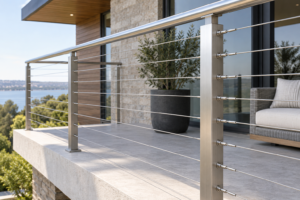
Stainless steel wire rope can be used as horizontal or vertical infill for residential and commercial balcony railings. Its slim profile helps preserve visibility while providing a clean, modern appearance.
Cable spacing, post spacing, railing height, end-post strength and cable tension must be confirmed according to the project design and applicable local building requirements.
Staircase Cable Railings
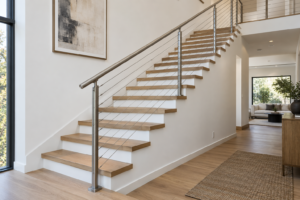
Cable railing can be installed along indoor or outdoor staircases where a lightweight architectural appearance is required.
Stair angles, cable direction, terminal alignment and fitting selection should be considered before cable lengths are confirmed. Accurate measurements are particularly important for prefabricated cable assemblies.
Deck and Terrace Railings
Stainless steel cable is widely used for decks, terraces and outdoor platforms. It provides a less obstructed view than many traditional infill materials and can be combined with stainless steel, aluminum or timber posts.
For outdoor or coastal projects, corrosion exposure should be considered when selecting between AISI 304 and AISI 316 stainless steel.

Commercial and Public-Space Guardrails
Cable railing systems can also be used for walkways, viewing platforms, hotels, offices and other public or commercial spaces.
These projects may involve specific requirements for guard height, opening size, structural load, accessibility and inspection. The complete railing system should be designed and approved according to the regulations applicable at the project location.
Where Stainless Steel Cable Is Used
Stainless steel wire rope is commonly used as railing infill between structural posts and rails.
Typical applications include:
- Balcony guardrails
- Staircase railings
- Deck and terrace railings
- Walkway protection
- Viewing platforms
- Architectural balustrades
- Indoor partition systems
- Vertical cable railing
- Horizontal cable railing
The performance of a cable railing system depends on more than the wire rope alone. Post strength, post spacing, cable spacing, initial tension, end fittings, anchors and installation quality all affect the completed system.
Recommended Wire Rope Options
1×19 Stainless Steel Wire Rope
A 1×19 construction is commonly selected for straight architectural cable runs because of its relatively rigid structure, smooth appearance and low stretch compared with more flexible constructions.
Suitable for:
- Straight horizontal railing runs
- Vertical cable infill
- Architectural cable systems
- Applications requiring a firm finished appearance
The cable must be compatible with the selected swage terminals, tensioners and other end fittings.
7×7 Stainless Steel Wire Rope
7×7 stainless steel wire rope offers greater flexibility than 1×19 construction and can be considered for customized assemblies or installations requiring easier handling.
Suitable for:
- Flexible cable assemblies
- Applications involving moderate bending
- Customized railing and architectural projects
- Cable systems using compatible fittings
Construction selection should be based on the railing design, required tension, bending conditions and fitting system.
AISI 304 Stainless Steel
AISI 304 stainless steel provides good general corrosion resistance and is commonly considered for indoor projects and outdoor installations in relatively mild environments.
AISI 316 Stainless Steel
AISI 316 stainless steel provides increased resistance to chloride-related corrosion and is generally preferred for coastal, marine, poolside, high-humidity or other more demanding environments.
Material selection should consider the actual exposure conditions, cleaning and maintenance requirements, expected service life and project budget.
Coated Wire Rope
Coated wire rope may be used when additional surface protection, reduced metal-to-surface contact or a specific finished color is required.
Please specify the inner cable diameter, finished outer diameter, coating material and color when requesting coated cable.
Available Specifications
Wire rope specifications can be customized according to the cable railing design and installation requirements.
- Material: AISI 304 or AISI 316 stainless steel
- Construction: 1×19, 7×7 or other available constructions
- Diameter: Selected according to the railing design and fitting compatibility
- Direction: Horizontal or vertical cable installation
- Supply form: Reels, coils or customized cut lengths
- End fittings: Swage terminals, threaded terminals, eye terminals, thimbles and other compatible fittings
- Surface: Natural stainless steel or coated
- Packaging: Customized according to quantity and transportation requirements
- Identification: Product labels and customized packaging marks are available
The final specification should be confirmed according to the installation layout, unsupported cable span, required tension, structural loads, fitting system and applicable local regulations.
Cable Railing Fittings and Accessories
Correct fitting selection is essential for secure cable termination, tension adjustment and efficient installation. Guangtong Metal supplies wire rope accessories for architectural cable assemblies.
Available fitting options may include:
- Swage terminals
- Threaded terminals
- Turnbuckles and tensioners
- Eye terminals
- Thimbles
- Wire rope clips
- Sleeves
- Customized cable ends
Please provide a drawing or clear fitting photo when requesting complete cable assemblies. The cable diameter, construction and terminal dimensions must be compatible.
Important Cable Railing Design Considerations
Cable Spacing
Cable spacing must be determined according to the required opening limitation and applicable building regulations. The effect of cable deflection under load should also be considered.
Post Spacing and Strength
Tensioned cables apply significant force to terminal and intermediate posts. Posts, frames and anchoring points must be designed to resist the resulting loads.
Cable Tension
Correct and consistent tension helps limit cable deflection. The selected tensioning system should also allow future adjustment when required.
End Terminations
Terminal fittings must match the cable material, diameter and construction. Improperly matched or installed fittings may reduce assembly performance.
Local Code Compliance
Guard height, cable spacing, opening limitations and structural load requirements vary between countries and project locations. Final railing design and installation should be reviewed by the project’s qualified designer, contractor or local authority.
Manufacturing and Supply Capabilities
Customized Cable Production
Wire rope material, construction, diameter, cut length, coating and end fittings can be supplied according to confirmed project specifications.
Specification Review
Before quotation, we review the cable material, construction, diameter, length, quantity, fitting type and packaging requirements.
Matching Components
Wire rope and compatible fittings can be supplied together to simplify purchasing and reduce specification mismatches.
Quality Control
Material, diameter, construction, surface condition, cable length, fittings and packaging are checked according to the confirmed order requirements before shipment.
Information Required for a Quote
To prepare an accurate quotation for your cable railing project, please provide:
- Application: Balcony, staircase, deck, terrace or walkway
- Indoor, outdoor, coastal or other installation environment
- Horizontal or vertical cable arrangement
- Preferred stainless steel grade
- Required cable construction and diameter
- Finished cable length
- Quantity
- Post spacing and cable spacing
- Required fittings or end terminations
- Minimum breaking load or other performance requirement
- Project drawing or installation photos
- Packaging requirements
Even if your specifications are not yet complete, simply send us the information, drawings or photos currently available. Our team will review your application, clarify the remaining requirements and help you determine suitable cable options.
Request a Cable Railing Wire Rope Quote
FAQ
What wire rope construction is suitable for cable railing systems?
A 1×19 stainless steel wire rope is commonly selected for straight railing runs because of its rigid structure and relatively low stretch. A 7×7 construction provides greater flexibility and may be suitable for customized assemblies. Final selection depends on the system design and fitting compatibility.
Should I choose AISI 304 or AISI 316 stainless steel?
AISI 304 may be suitable for indoor and relatively mild outdoor environments. AISI 316 is generally preferred for coastal, poolside, high-humidity and chloride-exposed environments.
How do I select the correct cable diameter?
Cable diameter should be selected according to the railing design, unsupported span, required tension, structural load, fitting compatibility and applicable local regulations. Send us your drawing and known requirements so we can review available cable options.
Can you supply cut-length cables and end fittings?
Yes. Stainless steel wire rope can be supplied in reels or customized cut lengths. Compatible terminals, tensioners, thimbles, sleeves and other fittings may also be supplied according to the confirmed assembly requirements.
Can you design the complete cable railing system?
We manufacture and supply wire rope and related fittings. We can help review cable specifications and product compatibility, but the complete railing structure, code compliance and installation must be confirmed by the project’s qualified designer, contractor or relevant local authority.
What if I do not have a complete specification?
Send us your application, dimensions, drawings, fitting photos and known requirements. We will review the information, explain which details still need to be confirmed and answer your product-related questions before quotation.